Digital Transformation
Digital transformation is the rewiring of an organization, with the goal of creating value by continuously deploying tech at scale. A clear digital transformation strategy focused on specific domains and enabled by a set of specific capabilities is critical for organizations to not only compete but survive. Digital transformations are not a one-and-done project; most executives will be on this journey for the rest of their careers.
Digital transformation is the strategic integration of digital technologies into all business areas, fundamentally changing operations and value delivery to customers. It involves cultural shifts, leveraging tools like AI, cloud computing, and IoT to improve efficiency, agility, and customer experience, moving beyond mere digitization to comprehensive process reengineering.

IT-Transformation
CloudOfficer leads and supports achieving your IT transformation delivery
IT transformation is the strategic overhaul of an organization’s IT infrastructure, processes, and culture, shifting from legacy systems to modern, agile technologies like cloud-based platforms. It aims to boost operational efficiency, reduce costs, increase security, and align technology with business goals to improve flexibility and innovation.

Experts in
Cybersecurity
Our CyberSecurity Specialist, your Cyber safety
Cybersecurity is the protection of digital systems, networks, devices, and data against unauthorized access, cyberattacks, and damage. It encompasses technical measures (firewalls, encryption) and procedures to ensure the confidentiality, integrity, and availability of data. The goal is to prevent hacks, ransomware, and theft.
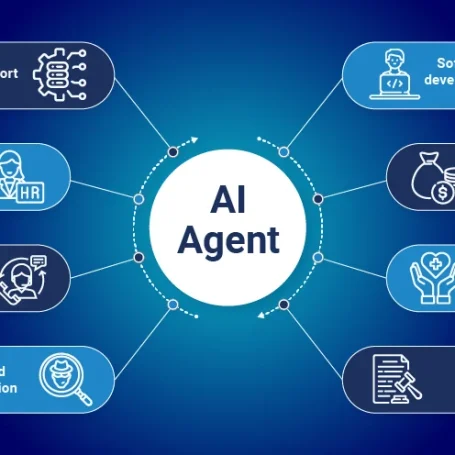
Agentic AI and GenAI
CloudOfficer implements Agentic AI
Generative AI (GenAI) creates new content (text, images, code) based on prompts, acting as a creative tool, whereas Agentic AI acts as an autonomous worker that plans, decides, and executes multi-step tasks to achieve a goal. Essentially, GenAI generates content, while Agentic AI acts on its own. Agentic AI describes AI systems that are designed to autonomously make decisions and act, with the ability to pursue complex goals with non or limited supervision.
Quantum
How Quantum works
Quantum computing is an emerging technology harnessing the quantum mechanics to solve complex problems beyond the capability of classical supercomputers. Utilizing qubits that exist in multiple states simultaneously, these computers can perform, parallel, high-speed calculations for fields like cryptography, material science, and pharmaceutical development.
What capabilities are needed to succeed in a Digital Transformation?
Abilities
The ability to craft a clear strategy focused on business value. Companies should focus their transformations on specific domains (customer journeys, processes, or functions) that generate significant value for the business. The transformation should be guided by a road map that details the solutions and resources needed to deliver change to prioritized domains.
Talent
A strong talent bench with in-house engineers. No company can outsource its way to digital excellence. Being digital means having your own bench of digital talent working side by side with your business colleagues. The best digital talent programs go way beyond hiring: they should include employee value propositions that attract and retain the best talent; agile and digital HR processes to find, manage, and train talent; and a healthy environment where the best talent thrives.
Operating model
An operating model that can scale. Digital transformations depend on cross-functional teams that bring together people from across the company. Most companies already have a handful of these teams, but scaling to support hundreds or thousands of them requires a new operating model. There are three primary operating models to consider: the digital factory, the product and platform model, and the enterprise-wide agility model.
Distributed technology
Distributed technology that allows teams to innovate independently. Technology in an organization should make it easier for teams to continually develop and release digital innovations to users. To make this happen, organizations should foster a distributed technology environment where every team can access the data, applications, and software development tools they need. Recent technology advances can help create this distributed environment—these include the thoughtful use of API's to disengage applications, the availability of developer tooling, the selective migration of high-value workloads to the cloud, and the automation of infrastructure provisioning.
Access to data
Access to data that teams can use as needed. Reliable, current data are crucial to successful digital transformations. Data architecture should produce data that are easily accessible by teams across an organization and should be continually assessed and updated. Strong governance is required to enable this capability. The core element is the data product, which structures various pieces of data into a coherent unit that can be easily consumed by a range of teams and applications.
Strong adoption
Strong adoption and change management. In the past, the technology adoption cycle was a linear process of gathering requirements, developing solutions, testing, and then training the end user. This process often resulted in low adoption rates and ultimately low business value. Digital transformations follow a far more iterative process of designing, prototyping, collecting feedback, and improving the solution so it can capture the full value potential. As a rule of thumb, for every dollar you spend on developing a digital solution, plan to spend at least another dollar on implementing process changes, user training, and change-management initiatives. Companies should think about adoption and scaling at the beginning of their transformation so they can build in the resources needed to deliver the change.